Fairy Controversial: Organoid Intelligence
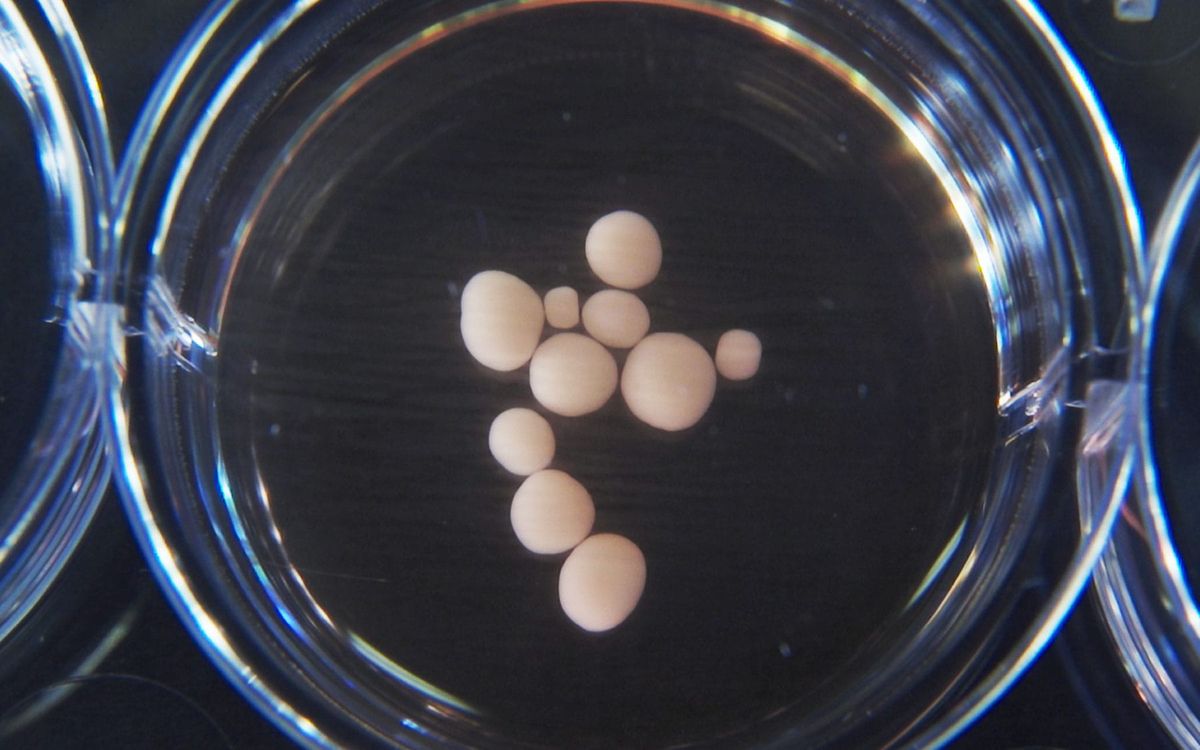
Let’s break it down: ‘Organoid’? What the hell’s an Organoid? Essentially it's any lab grown organ, they prefer them functioning and usually isolated from the rest of the structure it would usually interact with. ‘Intelligence’ here, is being used in the same sense as artificial intelligence, a label placing an aspirational goal more than an observation. Basically they are figuring out how to use it as a tool to aid our learning and mainly computational power. Now how do they go together? Well, some genius lab geeks decided that A.I was too slow and limited. They figured our brains ran better than purely programmed intelligence so maybe that's the secret ingredient. A little bit of us. So after years of trying to grow a brain in a petri dish, they want to know if you could run computational tasks through it. It’s better than a CPU, but if we knew what it was really (because it’s still being studied and determined), should we? Are we? And what’s the end goal?
It’s very early days for Organoid Intelligence (or OI) so early in fact testing on it is still very much in the wild west. Lawless, that is. No faculty has yet to conclude on this new lifeform’s entitlement to rights as of today. Currently they are going off of public opinion, of which I believe is NON_EXISTANT, because who knows about Organoid Intelligence at your local pub? Not Gary, or Dylan or Cheryll?? They chat about what’s on the telly. And this subject is a little too sensitive for Lorraine on ITV to mention. I also believe wholeheartedly that it benefits the ‘investors’, the people who have plans for this bio-tech, to create and mould their own narrative around it. So while they figure it out, the less we know the better. That is the reason, the necessity, for this article and articles like it.
Because this current manufacturing of a biological ‘product’ really does seem like the future our kids will protest over.
All because
A closer look at what an Organoid is: It’s us. “Generated either from embryonic stem cells or from the less ethically problematic iPSC[‘s]” (Organoid intelligence (OI): the new frontier in biocomputing and intelligence-in-a-dish. Front Sci (2023) ) it’s akin to a kind of cloning, using a volunteer’s DNA there are two ways. They can either use stem cells that take to growing into a culture naturally, that culture can then be moulded and pushed into producing different tissues, and are now advancing into organs. Or iPSC (induced pluripotent stem cells) which essentially get the same result just after a few extra steps. The main difference in these two methods comes from the procurement, iPSC’s are typically collected from adult donors, whereas stem cells are gathered from their natural source of 3-5 day old embryos and as you’ll find out, embryos, like our Organoids, have a very similar ‘will they, won’t they’ suspenseful controversy about them.
If there were an audience watching the development of this story, they’d be biting their nails. It sounds like we’re creating a monster and just waiting for it to scream all in the hopes of technology better than the computer. If you don’t yet agree, let’s go through some hopes and findings…
- As it stands most Organoid brain models are about 3-5mm big, and only last about a year.
Why is that? Well, cus their stability is in infancy. They can’t even feed themselves right now. They’re ‘Avascular’ which means they need passive ways of feeding. But they also need oxygen and their waste product removed. They breathe, eat and shit just like the rest of us animals.
Now to go back to the main goal. Imagine that in the heart of a computer.
- The hope for them is to “scal[e] up the size and induc[e] regional polarization”
Obviously, bigger is better. But with bigger does come brain development as well. Before, they were brain models, I fear they could cross the threshold as they grow. This, scarily meaning, potential: Awareness. Pain. Stress. But also, advanced thinking and learning techniques. And hopefully a vascular system (which is currently being co-contributed by the Yale stem cell centre as well as other American Universities) in order to make it sturdier and capable of an older growth and further development. The regional polarisation is all about splitting up different sections of the brain in order to make the organoid expand and fill in the gaps, therefore creating a more complex and similar ‘brain architecture’.
Their goal is to get as brain as brain can be. But… surely as brain as can be is not the goal. Because that seems to come with agency, thought and many would consider…humanity.
- THE ORGANOIDS REPORTED SIMILARITY TO PRETERM BABIES.
Isn’t that lovely. Doesn’t that just warm your heart? The idea that these 3-5mm lab grown brain-alikes are on track in their development so much so that their “cortex layers and oscillation waves are comparable to [the brain scans] of preterm human babies’ brains”! That means, give them a few more years of growing on the plate in that lab, with their increased maturation, they’ll be old enough to hold memories! Potentially think about their experience with the same existentialist ability as you and me. Only they won’t have agency over their workload. Their tasks. They most likely won’t get rewarded in any meaningful way. And if they do it would only be enough to keep them computing.
This is all speculative. We don’t know the future of these Organoids. I’m only theorising based off of the resulting alignment with our growth, and what then happens with us. The innocence and malleability of youth. The maturing struggle of teens. And then who knows what will come of adulthood, if they make it.
Imagination is the tool of such an unprecedented topic. Imagination based on facts. Let me ask you this…
Would you raise a child in a box and tell it to work?
- They help Maturation of Organoids by implanting them in animals for periods.
Just when it couldn’t get worse! Animal insertion. Also done in efforts to study human brain disease in a controlled manner, its main objective however is to aid the scale and growth, as well as giving it that vascular system to latch onto. It's been successful in that, Sergiu Pasca on ‘Nature Podcast (2022) said they showed a growth “9-10x that of in vitro” (Pasca,2022:Online) due to the latching on to blood vessels on the Rat’s brain. Implanted onto the portion that controls whiskers, The human neurons were even recorded to pick up stimulation. Though the Human Organoid did not seemingly affect behaviour of the Rat and did not increase human factors like memory, some neurological pathways were linked and in doing so transferred electrons. Whether the Human Organoid changed is another question that WAS not asked in the interview with Pasca, moral ethicality was discussed but the overall consensus is keep going and find out. Which walks a tight-rope of moral deviance, a fall that could shame our entire species. We write stories of flying too close to the sun and of mad doctors playing twisted god, i guess scientists don’t see the importance of fiction.
- They want to interface the Organoids with real world sensors and machine interfaces.
“We envision using biofeedback to systematically train with increasingly complex sensory inputs and output opportunities” (Organoid intelligence (OI): the new frontier in biocomputing and intelligence-in-a-dish. Front Sci (2023) ) we already discussed the desire for computational tasks, that comes with the territory of O.I, but real world sensors would cruelly and yet mercifully mean access to cameras, motion detectors, etc. giving a human-grown Organoid more view of the world than any of us and yet remain confined in a bodiless state of being, never knowing any different. The level of agency it would have with these tasks is unknown. Would it perceive? Would it yearn? Or would it simply be? Scrolling left to right using the computational power to scan all the faces in the footage? It’s a never before seen hybrid of something so warm and another so cold.
This particular goal of there’s seems to have been tested out on our rodent brethren, actual Lab Rats, with relative sized VR goggles attached and dangled onto a sphere for simulated movement. The tests were talked about online, comparisons to the Matrix couldn’t help but crop up. Stories are written as warnings or aspirations, always have been, there’s danger in mixing them up. That test was never linked to organoid virtual existence, my connection of the dots doesn’t make it fact, it only illustrates the similarity.
Can a creature tell it’s not meant to be in this state? How does it’s brain react to virtual life? They always test on Rats before humans. The one surprising new feature is to home grow the human, bodiless, with only one world witnessed and known. A pixelated daydream. A windowed nightmare.
Let’s Forget About Advancement & Think: were we ever asked about the direction of humanity? In these ‘Democratic’ countries where this science is taking place, were we asked for ‘our public opinion’? When the leading minds discover life can be plucked like a fruit from the tree, to be grown on a plate in a purified white room, unplugged from the joys of sensation, of the anguish and heartbreak. To grow like one of us in maturity and maybe thought, but to never experience those nights we talk away with the people who know us, to bridge the gap between our lonely thoughts. But to still send them to work, one of Our fruits, in a cold box with a distant flickering window, and maybe a metal toy to move. All for progress. Quicker computers/ Streamlined people. Can we not see the evil in this torment? In this alchemical, esoteric, brain in a jar level evil. A.I was nothing. A.I was an imitation. A well developed digital mirror that we personified because we were alone. THIS, this would be a forced evolution, one in which we cut out the heart entirely.
If You Want To Change This Direction: You can let your public opinion be known. We can shout up for this to stop, slow, no ethical conclusion around these Organoids can be met. Raise your voices to these people:
(Disclaimer* these are public emails)
J Lomax Boyd, PhD
Currently furthering the fight for ethics in experimental models of the human brain, including human brain organoids, engrafted organoids, human brain chimeras, and genetically engineered nonhuman animals.
Henry T. Greely
Professor by courtesy of Genetics, Stanford School of Medicine; Director, Center for Law and the Biosciences; Director, Stanford Program in Neuroscience and Society; and Chair, Steering Committee of the Center for Biomedical Ethics.
Tsutomu Sawai
https://ashbi.kyoto-u.ac.jp/members/tsutomu-sawai/
Tsutomu Sawai is an Associate Professor at the Graduate School of Humanities and Social Sciences at Hiroshima University. He leads the ELSI Unit at the University's Center for Collaborative Science and is also a Faculty member of the Frontier Development Program for Genome Editing.
These are respected people in their fields, all interested in the ethics of bioengineering and the development of O.I.
If you have a question, what would it hurt to ask them? Potentially follow their research. Uplift and shout out their findings to spread that public opinion. It’s only us, the people and Rats that can affect where this technology goes and how it is done.
Voice your opinion to those that matter.
This has been Fairy Controversial,
Now you got your Rat Nose you know what we nose.
-The Rat x